The Popularity of Zwift: A Sport, Training Aid, or Game?
by Nicolas Berger*, Phillip Smith, Andrew RichardsonEmail: n.berger@tees.ac.uk
Received: 30 Sep 2024 / Published: 15 Dec 2025
Abstract
Aims: The rise of e-cycling platforms, particularly Zwift, has transformed the cycling landscape by combining the physical exertion of outdoor cycling with the engaging, competitive elements of virtual gaming. This study explores the factors contributing to Zwift's popularity, examining user motivations, the integration of advanced technology, and the growing recognition of e-cycling as a legitimate sport. Methods and results: Survey data from 1,470 participants engaged in e-cycling or traditional cycling were recruited via social networking sites and online forums. The survey, conducted over 7 weeks in early 2021, showed that the average participant was 46.3 ± 11.3 years old, with 21.3 ± 15.9 years cycling experience. Among other things, users valued the platform's immersive experience, appreciated the social connectivity, and found it effective for enhancing training outcomes. The average expenditure on their training setups was £1,425.10 ± £7,911.38 reflecting a significant investment in their indoor cycling environments. Conclusion: Our findings suggest a strong future for e-cycling within the broader context of competitive sports, driven by advancements in technology and increasing user engagement. These insights contribute to a deeper understanding of how digital platforms are reshaping traditional sports, with implications for e-cycling platforms to use this work to help shape the future of cycling and fitness.
Keywords: E-cycling, Esports, Cycling, Sport, Zwift
Introduction
Cycling has a rich and varied history, from leisure and transport to a competitive sport. Since the origin of competitive cycling in 1868 (1), it has diversified into numerous disciplines, including mountain biking, BMX, road cycling, track racing, cyclocross, and, more recently, gravel riding (2). Major cycling events like the Tour de France, first held in 1903, attract up to 3.5 billion television viewers and 12 million roadside spectators annually, highlighting its enduring appeal (3).
Technological advancements have played a significant role in the development of cycling as a sport. The first wireless ECG and heart rate monitor was invented in 1977, and became widespread by the 1980s (4, 5), enabling athletes to monitor their heart rates in real time. Around this time, power meters were developed to measure a cyclist's mechanical power output, providing a direct and objective measure of effort. Power meters are mostly crank or pedal based and can provide dual sided measurement along with wireless data transmission via Bluetooth or ANT+ protocols. Today’s power meters claim an accuracy of ± 2%, allowing for precise training and competition strategies (6). Initially, cycle computers measured the distance covered by counting wheel rotations. Modern cycle computers provide comprehensive data on speed, distance, location, and elevation using GPS data, while offering wireless connectivity with external sensors such as power meters and heart rate monitors (7). This connectivity allows for real-time feedback and data analysis, further enhancing the training experience.
Indoor training has been an integral part of cycling since the late 19th century. Early indoor trainers, like the 1884 penny-farthing trainer enabled cyclists to ride indoors, and by the 1900s designs for "rollers" were developed. These consisted of three drums connected by a belt, allowing riders to maintain balance while riding stationary indoors. Surprisingly, the concept of virtual training can be traced back to 1888, with advertisements describing early attempts to simulate outdoor riding experiences indoors (8). The first home trainer racing machine was patented in 1896 by A.L. Knighten and consisted of two bicycles connected to a large platform upon which sat two smaller bicycles that moved when the riders pedalled and thus ‘raced’ each other (9). Modern indoor training technology has advanced significantly. The first wheel-on trainer was introduced in 1976 and by 1986 it incorporated power measurement capabilities (10). The advent of direct-drive smart trainers by Wahoo in 2012 marked a turning point. Direct-drive trainers replaced the rear wheel of the bike and could adjust resistance based on virtual course data, simulating real-world riding conditions such as including drafting and changes in terrain.
The popularity of these trainers surged during the COVID19 pandemic with UK retailers reporting a 977% increase in turbo trainer sales from 2019 to 2020 (11) E-cycling platforms, particularly Zwift, have revolutionised indoor training. They combine the physical exertion of traditional cycling with the convenience and engagement of online gaming. The platform allows users to ride and compete in virtual environments that mimic real-world locations and fantasy worlds, blurring the line between traditional esports and physical sports. Ecycling represents a new, hybrid form of competition that appeals to a wide range of cyclists and enhances the appeal of indoor training. Zwift reported 49,114 simultaneous users cycling together on a single day in 2021, with an estimated subscriber base between 750,000 to 900,000 (12). A cycling “pain cave" refers to a dedicated indoor space where cyclists train using stationary bikes or trainers, typically equipped with cycling gear, fans, and devices to monitor performance. The term “pain cave" reflects the physical and mental challenges of tough workouts (13). Technological advancements in cycling, from heart rate monitors and power meters to smart trainers and virtual platforms like Zwift, have significantly enhanced the training and competition experience. These innovations provide cyclists with detailed data, immersive environments, and new ways to engage with the sport, whether indoors or outdoors. As cycling continues to grow in popularity and accessibility, these technological tools will play a crucial role in shaping its future. However, little is known about the demographics of e-cyclists, the motivations driving participation in e-cycling and e-racing or how seriously ecycling events are considered compared to in-person events. To gain an understanding of these factors, we conducted a survey of cyclists and e-cyclists.
Aims
1. Understand what makes Zwift so popular 2. Determine the motivating factors for e-cycling and e-racing on Zwift 3. Understand the barriers to participation on Zwift and e-cycling platforms
Methodology
After receiving approval from the Teesside University, School of Health and Life Sciences ethics committee, 1,470 respondents were recruited using opportunity sampling, from online forums (e.g. Reddit) and social networking sites (Facebook, X, and Instagram). Respondents were self-identified cyclists or e-cyclists, aged 18 and above. The survey was open for seven weeks between February and March 2021.
Measures
To gather information on the respondents’ cycling and e-cycling backgrounds and experiences we created an online survey (OnlineSurveys.ac.uk, JISC, Bristol, UK). Questions covered anthropometric data, training history, training methods, online training and racing, cycling motivations, indoor training set-up, COVID-19, cheating, doping, and anti-doping. We conducted a cross-sectional, observational, descriptive study with multiple-choice, rating scale and short response formats used for the questions. After respondents provided written consent, survey completion took around 10-15 minutes and they were free to leave at any point prior to completion.
Following this, all responses were anonymised with no identifying information collected. No financial or other incentives were given for participation.
The survey was closed once the authors felt that data saturation had occurred rather than aiming for a specified quantity (14). This was decided at the end of the final week of data collection after response review (15). Furthermore, even though the participant population was heterogeneous, the same incidences repeatedly occurred regardless of sex, age, or nationality (15). In order to start data analysis, recruiting was closed after seven weeks.
Data Analysis
Responses were exported from JSIC Online Surveys to Excel (v2016, Microsoft, Redmond, WA, USA) and the Statistical Package for Social Science (SPSS, V27, IBM, Armonk, NY, USA) for data tidying and coding. Responses were coded, categorised into smaller themes and presented as frequency plots and tables, covering topics around cycling and e-cycling. Descriptive statistics were reported as means and standard deviations. The percentages reported relate to those who answered that question (as respondents did not always answer all questions), numbers presented are a count of responses, with multiple answers sometimes possible.
Results
The respondent’s characteristics (mean and standard deviation) are displayed in Table 1.
Overall
Males
Females
Sex
n=1,470 n=1,132 n=338
Age (years)
46.3 ± 11.3 46.6 ± 11.4 45.3 ± 10.9
Height (cm)
176.7 ± 8.9 179.7 ± 7.1 166.8 ± 7.1
Body mass (kg)
76.5 ± 13.1 79.2 ± 11.7 67.4 ± 13.6
Table 1. Respondents’ demographics.
Most respondents were from the United Kingdom (49.32%) and the United States of America (24.2%), followed by Canada (6%), Australia (3.6%), and the Republic of Ireland (2.2%). These countries made up 85.4% of the responses (n=1,255) with less than five respondents from each of the remaining 43 nations.
Figure 1. Heatmap of respondent nationality.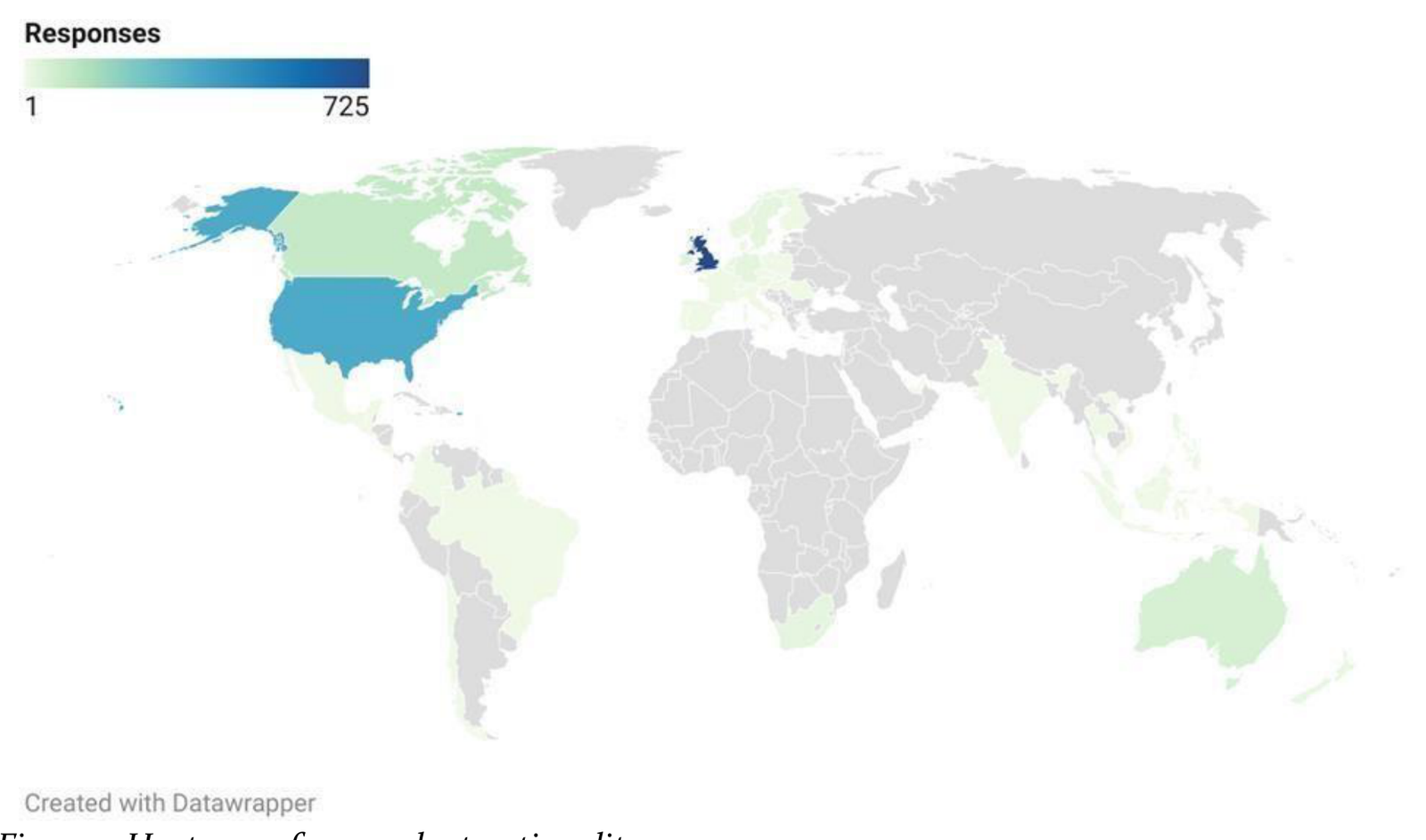
Respondents had an extensive training history with 21.3 ± 15.9 years of cycling experience. By sex, this was 22.6 ± 16.1 years for males, and 19.5 ± 14.2 years for females. Figure 2 displays cycling experience in five-year brackets.
Figure 2. Respondents' years of cycling experience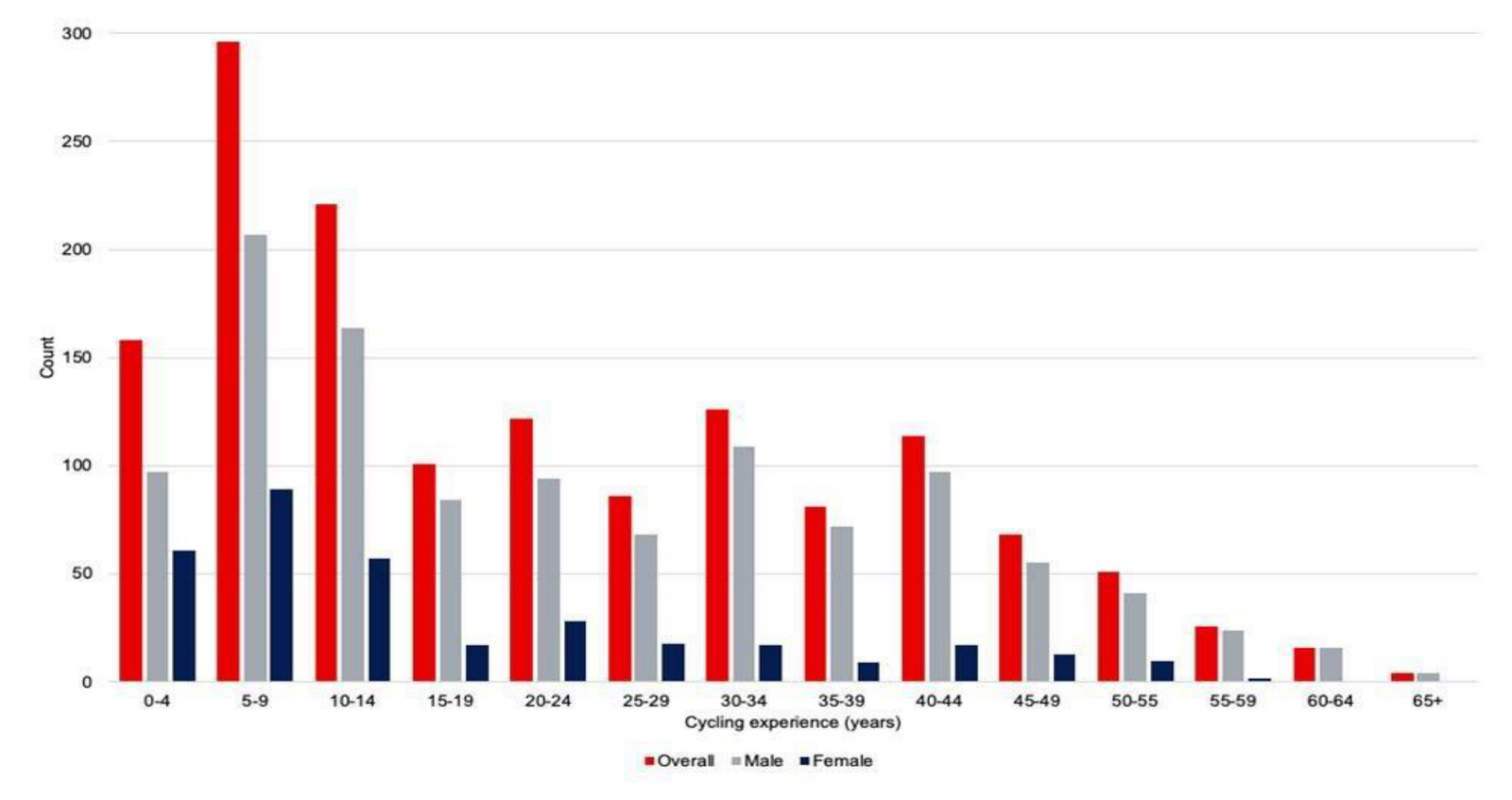
Awareness and participation in e-cycling and e-racing
Almost all (97.6%) of respondents had encountered e-cycling or e-racing. Only 1.4% had not, and 1% were unsure. 60.9% reported being members of in-person cycling clubs, 55% reported being members of e-cycling clubs (which included online sections of their in-person club). Respondents had widely varying definitions of what e-cycling and e-racing is.
The most frequent mentions referred directly to various e-cycling platforms (Table 2).
| Overall Male | Female | ||
|---|---|---|---|
| Total | 1,470 | 1,132 | 338 |
| Referring to Zwift/RGT/Rouvy/TrainerRoad, and other platforms | 434 | 318 | 116 |
| I like it/I love it/it's fun/it’s great | 237 | 198 | 39 |
| Virtual racing/virtual riding | 220 | 157 | 63 |
| Cycling online/online cycling/online racing | 184 | 144 | 40 |
| Unsure | 122 | 102 | 20 |
| Cycling indoors/cycling on a stationary bike | 72 | 57 | 15 |
| Alternative mode of cycling/new form of cycling / accessible form | 55 | 44 | 11 |
| of cycling | |||
| A game/video game/computer game | 32 | 24 | 8 |
| Turbo trainer/using a turbo trainer/turbo | 27 | 16 | 11 |
| Fitness test/training tool/training device for cycling | 26 | 24 | 2 |
| Electric bike/e-bike/powered bike | 25 | 20 | 5 |
| Smart trainer/trainer | 19 | 16 | 3 |
| Digital platform/app | 9 | 6 | 3 |
| e-sport/electronic sport | 8 | 6 | 2 |
Table 2: Respondents’ definitions of e-cycling
Prior to the COVID-19 pandemic, 53.8% of respondents (56.4% of males, 46% of females) reported that they participated in e-cycling, with 84.9% of respondents participating in e-cycling at the time of the survey, with minimal difference by sex (85.4% of males, 83.3% of females).
Overall
Male
Female
Total
1,470 1,132 338
Exercise/fitness/training
261 210 51
Community/communicating with others/social
248 193 55 interaction/friends/training partners/participate in group rides
Fun/enjoyment
169 125 44
Incentives/motivation to keep going
70 53 17
Prevents boredom/changes up routine/variation in
66 51 15
workouts/more variation to cycling
Competition/competitive element/challenge
55 49 6
Bad weather/winter months
42 35 7
Availability/ease of participation/convenience
19 14 5
COVID-19/lockdown
16 12 4
Training with the pros/riding with the pros/speaking with the
14 10 4
pros
Table 3. Motivations for participating in e-cycling events| Overall | Male Female | ||
|---|---|---|---|
| Total | 1,470 | 1,132 | 338 |
| Exercise/training/fitness | 312 | 234 | 78 |
| Enjoyment/fun/entertainment | 250 | 192 | 58 |
| Competition/compare against others/push myself against other | 239 | 195 | 44 |
| riders | |||
| Challenge myself/a new challenge | 88 | 66 | 22 |
| Community/company to train or race with others /social/group | 73 | 55 | 18 |
| races/communication | |||
| Motivation | 24 | 17 | 7 |
| Preventing boredom | 10 | 8 | 2 |
| Accessibility/availability/convenience/ease of access | 7 | 5 | 2 |
| Bad weather/winter months | 5 | 4 | 1 |
Table 4. Motivations for participating in e-cycling races
Respondents used a variety of platforms for e-cycling. The most common response was Zwift, both as a sole platform (65.5%) and alongside other named platforms (24.1%), for a total of nearly 90%. RGT, TrainerRoad, and Rouvy were mentioned by 15-38 respondents, and Bkool, Fulgaz, IFIT and Sufferfest were mentioned by less than 10 respondents. Typically, respondents would most often ecycle alone (47%), or less frequently with e-cycling club members (22%), anyone online (19%), with friends (7%), or in-person club members (5%).
Indoor training setup
The majority of respondents (81.3%) had a dedicated space for e-cycling. However, few respondents specified the location of their indoor cycling space. From those that did, the garage was the most popular location although this was 2.5%of the total. Socioeconomic data was collected based on the amount of money respondents have spent on their indoor training space. From the 1,307 responses to this question, a total of £1,965,630 was spent, which averaged £1,504 ± £1,967 per person. By sex, males spent an average of £1,533 ± £2,135, while females spent slightly less, at £1,399 ± £1,187. Most respondents (79.1%) had never bought an accessory product marketed towards e-cycling (not including turbo trainers, which are essential to e-cycling). The respondents that had purchased items listed over 20 different products. The most common were indoor cycling-specific clothing (n=38), nutrition (n=19), a rocker plate (n=15), a sweat catcher/sweat guard (n=14), and an iPad holder (n=10). All other items were mentioned less than 10 times.
In addition to the e-cycling platforms, respondents often used multiple different devices and many unique equipment pairings. In total, over 50 products were mentioned. The most popular application was Discord (n=320), followed by the Zwift Companion app (n=55), OBS (n=43), Zoom (n=32), WhatsApp (n=23), Facebook and Facebook Messenger (n=21), Strava (n=20), YouTube (n=15), with all other products mentioned less than 10 times each.
E-cycling as a form of training
E-cycling was considered a central part of their training by 84.6% of respondents (84.6% of males, 84.8% of females). In contrast, 13.2% did not view it as central to their training, with 12.8% of males and 14.6% of females reporting this. The remaining 2.1% considered it a somewhat central part of their training. Most respondents (64.7%) e-cycle year-round, with similar responses for males (65.2%) and females (63%). 28.7% would only e-cycle during the winter months, and 6.6% answered “other”.
| Overall | Male | Female | |
|---|---|---|---|
| Total | 1,470 | 1,132 | 338 |
| No - nothing specified | 469 | 369 | 100 |
| Winter months | 301 | 235 | 66 |
| Bad weather only | 229 | 166 | 63 |
| All year round | 187 | 143 | 44 |
| Yes - nothing specified | 86 | 65 | 21 |
| Rarely/seldom | 68 | 53 | 15 |
| Never used an indoor trainer until Zwift/Rouvy/TrainerRoad | 38 | 30 | 8 |
| came along |
Never used an indoor trainer
33 26 7
Table 5. Before e-cycling did you use an indoor trainer?
E-cycling as a new cycling discipline
The perceived barriers to e-cycling were varied, with respondents able to provide multiple answers, which were coded into 12 themes as displayed in Figure 3. The most frequently mentioned barrier was related to cost (n=683), with concerns around the verification of race results (n=143) and
Figure 3. Barriers to e-cycling and e-racing.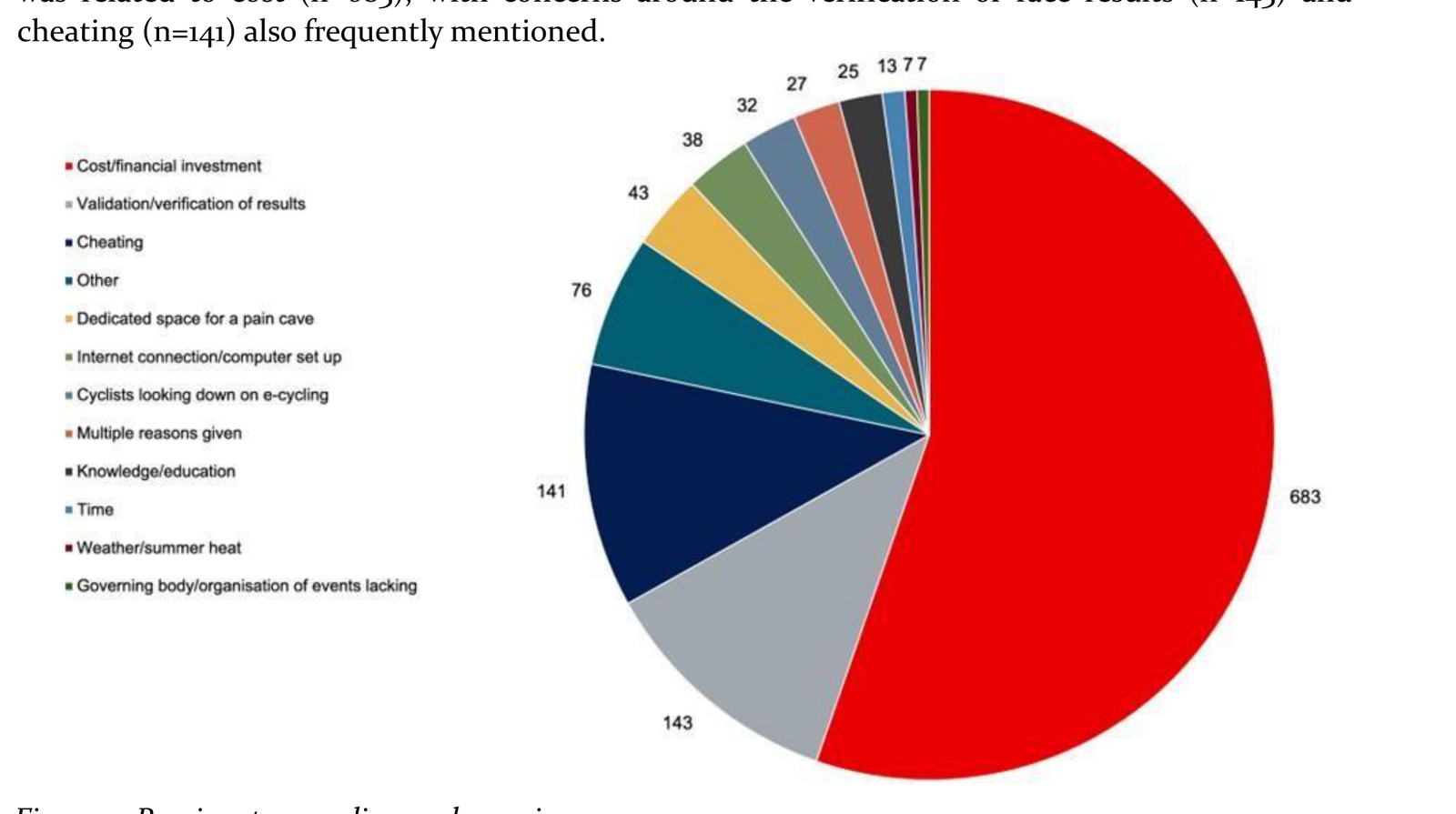
Respondents had mixed views on whether e-cycling and e-racing are more accessible forms of cycling. Broadly, 73.9% said some variation of “e-cycling is more accessible”, with 24.7% opposed, and 1.4% responding “other”. Amongst the positive and negative responses, the five most popular answers were; “yes-nothing specified or expanded upon” (48.7%), “no-nothing specified or expanded upon” (14.8%), “yes and no/yes for some aspects and no for other aspects” (6.1%), “nopeople are priced out/too expensive” (4.1%), and “yes-more accessible” (4%). To determine how ecycling is perceived, respondents were asked if they considered e-cycling and e-racing more of a game, or a mode of cycling. The most common response was to consider it a mode of cycling (52.8%), followed by a game (27.2%), a bit of both (14.8%), a training tool (4.8%), and “other” (0.4%).
Respondents mostly felt that e-racing had crossed from something they trained with, to something they trained for (69%). A few (11.9%) felt it was still a training tool, while 14.4% felt it was and wasn’t, with 4.7% unsure. When asked if they found e-racing or in-person racing more fun, most respondents reported finding in-person racing more fun (62.6%), while 23.1% found e-racing more fun, 10.3% found them similar or were not sure, and 4% felt they couldn’t compare the two. It should be highlighted that these results differ from our previously published work which was focused on the perceptions of cheating and doping (13). The largest difference is this work has responses from 43 nationalities, compared to 47 previously (13). The order of the six most common countries (85% of respondents) is unchanged. As no analysis by country was conducted, the overall findings do not change.
Discussing the Popularity of Zwift
Zwift’s popularity can be attributed to several key factors identified in the survey. Respondents cited ease of participation, social interaction, competitive elements, and an alternative to outdoor cycling during bad weather as primary motivations for using the platform. Zwift offers a convenient and engaging way for cyclists to train indoors, combining the physical exertion of cycling with the interactive and social elements typical of online gaming platforms (12). This aligns with broader trends in digital fitness platforms where convenience and community are significant drivers of engagement (16, 17).
Prior to the COVID-19 pandemic, 53.8% of respondents were already engaged in e-cycling, which suggests it was a well-established activity within the cycling community. At the time of the survey, 84.9% of respondents were still engaged in e-cycling, demonstrating sustained interest and usage. Respondents largely viewed e-cycling as a legitimate and accessible form of cycling, with structured events, races, and interactive elements enhancing its appeal and providing a credible alternative to traditional cycling. Zwift’s integration of advanced technology, such as smart trainers and detailed performance metrics, enhances the training experience, making it appealing to a wide range of users (7, 17). Additionally, the ability to participate in virtual group rides and races fosters a sense of camaraderie and competition, further boosting user retention (17). Notably, 96% of respondents took part in group rides when e-cycling, compared to 51.6% who did so in person and there was a 20% increase in online racing (68.6%) compared to in-person racing (48.3%).
These findings align with Devine, Devine, and Burns (18), who examined the virtual event experience of cyclists competing on Zwift. Their work had a similar breakdown by sex, with 87% males and 12% females from a total sample of 608 respondents. They found that Zwift provides users with realistic and serious competition in a social environment, making it a viable substitute for real-life cycling events. In line with our findings, Cycling Ireland noted that 92% of their members wished to continue virtual events post-COVID-19, and similarly, 83.6% of our respondents remained engaged in e-cycling.
Cycling experience and involvement
Respondents exhibited a broad range of cycling experiences, with an average of 21.3 ± 15.9 years of involvement, and 60.9% of respondents were members of in-person cycling clubs, indicating a deeply embedded cycling culture. This high level of club membership highlights the importance of community and structured activities in maintaining cycling engagement. Club membership often provides access to regular group rides, training sessions, and social events, which can enhance the overall cycling experience and encourage continued participation (19). Regular participation in club events, races, and group rides was common, although 50.3% of respondents reported no in-person race participation, and only 16.9% participated in one race per month, suggesting that competitive racing may not be a primary focus for a significant portion of the community.
Barriers to participation
Respondents identified several barriers to their cycling participation, including cost, distance to events, time constraints, and safety concerns. Cost was a particularly significant barrier. It was mentioned 683 times by respondents, indicating it hindered their ability to improve their performance. Common improvements desired included new bikes, better wheels, and professional coaching. These barriers highlight the need for affordable and accessible cycling resources to support broader participation. Additionally, concerns around the validation of race results (143 mentions) and cheating (141 mentions) were prominent issues. These findings align with broader concerns about integrity across the esports landscape (13, 20, 21).
Motivations for cycling
The most common reason for participating in e-cycling events was for exercise, fitness, or training, as mentioned by 261 respondents. Social reasons, such as communicating with others and joining group rides, were closely followed with 248 mentions. Fun and enjoyment were cited by 169 respondents, while only 14 mentioned virtual rides with professional cyclists as a motivator. For ecycling races, 312 respondents cited exercise, fitness, or training as their primary motivation, followed by fun and entertainment with 250, and competition or comparing performance with others with 239. Surprisingly, the lowest motivation for e-cycling was weather-related. Only five respondents cited bad weather as a reason for participation.
E-cycling as a sport
The perception of e-cycling as a legitimate sport is supported by several aspects of the survey findings. Respondents viewed e-cycling positively, recognising its potential to complement traditional cycling activities. The competitive nature of Zwift, with its structured events, races, and leaderboards, aligns with traditional sporting elements. Furthermore, the physical effort required to generate power and move the avatar on-screen distinguishes e-cycling from purely sedentary video games (22). This physicality and the structured nature of e-races lend credibility to e-cycling as a sport, similar to how other physically demanding esports are gaining recognition (23).
Although Zwift incorporates gaming elements, such as virtual rewards, avatars, and interactive courses, it transcends the definition of a mere game. The physical exertion required, and the structured nature of activities align more closely with traditional sports and training aids. However, the gamification aspects contribute significantly towards its appeal and user engagement (24), with 52.8% of respondents considering it a form of cycling, 27.2% viewing it as a game, and 14.8% seeing it as a mix of both.
The popularity of Zwift, with 750,000-900,000 subscribers and the ability to host simultaneous users cycling together underscores its status as a sport. The platform's success in creating a virtual environment that mimics real-world cycling conditions, including drafting effects and varied terrain enhances its credibility as a sport. The inclusion of features such as power-ups and tactical elements further enriches the competitive experience, akin to traditional video games (25).
E-cycling as a training aid
Zwift is also widely recognised as an effective training aid. Our survey revealed that 53.3% of respondents utilised structured training plans available either on the platform, or from books, websites, or personal coaches, highlighting its role in supporting fitness and performance goals (13). In addition to Zwift’s own training plans, users can build or export the sessions to other sources. The use of smart trainers which provide real-time feedback and resistance adjustments, allows cyclists to simulate outdoor riding conditions and improve their training outcomes (26). Structured training programs, like those on Zwift, can enhance athletic performance by providing targeted workouts and real-time performance analytics (27). The platform's ability to offer personalised training programs and track detailed performance metrics makes it a valuable tool for serious athletes and fitness enthusiasts (26). The integration of heart rate monitors, power meters and other fitness devices into the Zwift ecosystem enhances its utility as a comprehensive training aid (28). Undoubtedly, the platform’s ability to blend fitness with gaming elements has been crucial in attracting a diverse user base, ranging from fitness enthusiasts to serious cyclists (29).
Respondents reported substantial investments in their indoor training setups, indicating the value they place on the technological capabilities provided by Zwift, and on their training and racing setups. Several respondents reported spending significant amounts of money on their indoor training spaces, some as much as £10,000-£30,000 for building extra rooms or sheds just for this purpose. Respondents must also factor in the ongoing cost of a Zwift membership into their ecycling expenditure. In May 2024 the monthly subscription increased from £12.99 ($14.99 USD) to £17.99 ($19.99 USD) per month, a 38% and 33% price increase, following the previous price change from £7.99 ($9.99) to £12.99 ($14.99) per month in 2017.
Limitations and Considerations
Despite the large sample generated from the data collection, all responses were collected in English, and most respondents came from native English-speaking nations, as the questionnaire was solely developed in English by UK-based authors. Findings may differ if they were gathered from non-English speaking countries. Furthermore, it should be noted that our respondents were 46.3 ± 11.3 years old. As there is no precise data on the demographics of the 750,000-900,000 users of Zwift, we cannot determine if this is an accurate representation of the wider user base. The survey was shared on websites with online cycling communities, group chats and e-cycling forums. Since the survey did not specifically target recreational riders or competitive racers, our findings may differ from other e-cycling studies, such as Westmattelmann et al. (30). As data collection took place in early 2021, many respondents may have e-cycled because many nations were still operating under lockdowns or allowing employees to work from home.
If the survey were to be repeated in 2025, findings may differ. Again, since the survey period, some e-cycling platforms have closed (RGT), been taken over (TrainingPeaks Virtual), and new platforms have been created (e.g., MyWhoosh). Since we gathered our data from social media forums and groups actively involved in cycling and/or e-cycling, there may have been a bias in self-reporting. However, there were no financial incentives for respondents completing the survey.
Conclusion
Zwift’s popularity appears to be driven by its ability to seamlessly blend elements of sports, training aids, and gaming into a single, immersive platform. The results of the survey reinforce the view that e-cycling, exemplified by Zwift, is a legitimate sport and effective training aid, which is enhanced by its interactive and gamified features (31). The majority of survey respondents considered Zwift a central part of their training (84.6%), and 64.7% used it year-round. Furthermore, 52.8% consider ecycling a mode of cycling rather than a game, and 69% of respondents specified e-racing was something they specifically trained for, rather than used solely as a training tool. The importance placed upon e-cycling is emphasised by the survey respondents spending on average £1,504 on their indoor training space. However, this has resulted in entry cost being viewed as a barrier to participation, which was highlighted by 683 respondents. These insights show how digital technology is revolutionising sports and physical activities, creating new opportunities for engagement and performance enhancement in the cycling community. The integration of advanced technological features, competitive elements and social interactions ensures that Zwift and similar platforms will continue to be pivotal in the future of cycling and digital fitness.
The survey provides valuable insights into the demographics, experiences, and perceptions of a diverse cycling community. This work helps to add further legitimacy to the popularity of cycling esports with the anticipated International Olympic Esport Games in 2027 (32). The new sporting discipline fits within the mission and goals of the Olympic Committee under recommendation nine, "encourage the development of virtual sports and further engage with video gaming communities" (33).
Ethical Statement
Ethical approval was granted by Teesside University School of Health and Life Sciences. Reference; 2021Jan1987SMITH.
Conflict of Interest
The authors declare that they have no conflict of interest when writing this manuscript.
Funding Statement
No funding was given to the creation of this study.
References
- Berto F. Bicycle - From boneshakers to bicycles: Encyclopedia Britannica; 2021 [Available from: https://www.britannica.com/technology/bicycle/From-boneshakers-to-bicycles.
- UCI. Disciplines: UCI; 2024 [Available from: https://www.uci.org/disciplines/all/2tLnZMo6WrUBplRXDxyEi7.
- Larsson R. Tour de France - A new Arena for Marketers? : Advertising Week; 2023 [Available from: https://advertisingweek.com/tour-de-france-a-new-arena-for-marketers.
- Burke E. Precision heart rate training: Human Kinetics; 1998.
- Polar. Polar’s 40 Years of Incredible Firsts: Polar; 2021 [Available from: https://www.polar.com/blog/40-years-of-incredible-firsts-polar-history/.
- Broeder CE. Power meter principles for optimizing testing, training and performance strategies in cycling. Routledge Handbook of Ergonomics in Sport and Exercise: Routledge; 2013. p. 247-62.
- Garmin. About Us: Garmin; 2022 [Available from: https://www.garmin.com.sg/company/about/.
- review TWact. The Wheel and cycling trade review New York: Wheel and cycling trade review; 1888 [1:[Available from: https://library.si.edu/digitallibrary/book/wheelcyclin12171888newy.
- Cripps A. Cycling Patents of Yesteryear: No. 1 – A. L. Knighten’s Home Trainer Racing Machine, 1896: Cycling History; 2014 [Available from: https://cyclehistory.wordpress.com/2014/10/31/cycling-patents-of-yesteryear-no-1-alknightons-home-trainer-racing-machine-1895/.
- RACERMATE. Racermate CompuTrainer Classic 2024 [Available from: https://www.racermateinc.com/product/computRrainer-classic/.
- Arthurs-Brennan M. UK turbo trainer sales up 977 per cent at Sigma Sports as cyclists grapple with coronavirus crisis: Cycling Weekly; 2020 [updated 20/03/2020. Available from: https://www.cyclingweekly.com/news/product-news/uk-turbo-trainer-sales-up-977percent-at-sigma-sports-as-cyclists-grapple-with-coronavirus-crisis-452203
- Maker R. Here’s Why Peak Zwift Is Always a Tuesday: DCRainmaker; 2024 [Available from: https://www.dcrainmaker.com/2024/01/zwift-always-tuesday.html.
- Richardson A, Berger N, Smith P. Perceptions of Cheating and Doping in E-Cycling. Sports. 2023;11(10):201.
- Braun V, Clarke V. Successful qualitative research: A practical guide for beginners. 2013.
- Saunders B, Sim J, Kingstone T, Baker S, Waterfield J, Bartlam B, et al. Saturation in qualitative research: exploring its conceptualization and operationalization. Quality & quantity. 2018;52:1893-907.
- Hamari J, Koivisto J. Why do people use gamification services? International journal of information management. 2015;35(4):419-31.
- Shrubsall J. Build it and they will come: the rise of Zwift: Cycling Weekly; 2024 [Available from: https://www.cyclingweekly.com/news/build-it-and-they-will-come-the-rise-ofzwift.
- Devine A, Devine F, Burns A. An examination of the virtual event experience of cyclists competing on Zwift. Event Management. 2024;28(1):151-67.
- Falcous M. Why we ride: Road cyclists, meaning, and lifestyles. Journal of sport and social issues. 2017;41(3):239-55.
- Dyer B, Taylor J. An Investigation Into the Attitudes of Virtual Cycling Participants Regarding Avatar Bodyweight Manipulation and Weight Doping. Journal of Electronic Gaming and Esports. 2023;1(1).
- Richardson A, Tjønndal A, Demetrovics Z, Bates G. Issues and Threats to the Integrity of Esports. Elsevier; 2024. p. 100297.
- Harris O. A brief history of esports and competitive gaming: The sporting blog; 2021 [Available from: https://thesporting.blog/blog/a-brief-history-of-esports-andcompetitivegaming.
- Jenny SE, Manning RD, Keiper MC, Olrich TW. Virtual (ly) athletes: where eSports fit within the definition of “Sport”. Quest. 2017;69(1):1-18.
- Westmattelmann D, Grotenhermen J-G, Stoffers B, Schewe G, editors. Exploring the adoption of mixed-reality sport platforms: A qualitative study on ZWIFT. ECIS; 2021.
- McIlroy B, Passfield L, Holmberg H-C, Sperlich B. Virtual training of endurance cycling–A summary of strengths, weaknesses, opportunities and threats. Frontiers in sports and active living. 2021;3:631101.
- Friel J. Ride Inside: The Essential Guide to Get the Most Out of Indoor Cycling, Smart Trainers, Classes, and Apps: VeloPress; 2020.
- Neal CM, Hunter AM, Brennan L, O'Sullivan A, Hamilton DL, DeVito G, et al. Six weeks of a polarized training-intensity distribution leads to greater physiological and performance adaptations than a threshold model in trained cyclists. Journal of applied physiology. 2013.
- Bent B, Goldstein BA, Kibbe WA, Dunn JP. Investigating sources of inaccuracy in wearable optical heart rate sensors. NPJ digital medicine. 2020;3(1):18.
- Hamari J, Keronen L. Why do people play games? A meta-analysis. International Journal of Information Management. 2017;37(3):125-41.
- Westmattelmann D, Dreiskämper D, Strauß B, Schewe G, Plass J. Perception of the current anti-doping regime–A quantitative study among German top-level cyclists and track and field athletes. Frontiers in psychology. 2018;9:1890.
- Devine A, Devine F, Burns A, Nugent G. The virtual event experience: Exploring the potential of Zwift. Virtual Events Management: Theory and Methods for Event Management and Tourism. 2023:114.
- International Olympic Committee. Inaugural Olympic Esports Games to be held in Riyadh in 2027; 2025 [Available from: https://www.olympics.com/ioc/news/inauguralolympicesports-games-to-be-held-in-riyadh-in-2027-road-to-the-games-to-start-thisyear].
- International Olympic Committee. Olympic Agenda 2020+5: 15 Recommendations; 2021 [Available from: https://www.olympics.com/ioc/olympic-agenda-2020-plus-5].