Measuring the social impact of smaller scale esport events: A Mixed Methods investigation
by Raphael-Enea Prifti*, Wesley Breul, Koen BreedveldEmail: eprifti@hhs.nl
Received: 17 Jun 2025 / Published: 09 Aug 2026
Abstract
This study explores the societal impact of small-scale esports events. The data was collected in two esports events organized at the Hague university of applied sciences (THUAS) in different timeframes. A mixed methods approach, with a focus on inclusivity, social interaction, community participation, and social integration was used. Esports events can offer competitive experiences and foster a strong sense of community, as evidenced by the survey results showing that visitors think highly of the esports community. One of the key findings is the significant role esports events play in building social connections, followed by participants frequently highlighting the importance of interaction, underscoring how these events contribute to a sense of belonging and social cohesion. Furthermore, attendees praised the diversity of participants and the welcoming atmosphere even in competitive settings which provided networking opportunities. Many participants valued the events as a natural environment forming both social and professional connections, which stemmed from the organized yet relaxed atmosphere that encouraged meaningful conversations and the development of long-term relationships. Esport competitions are uniquely positioned to replicate and, in the future, surpass the societal benefits associated with traditional sports. By attracting diverse audiences and leveraging interactive technologies, esports appeal to younger generations and align with the shift toward immersive entertainment. Ultimately, esports events have the potential to enhance community involvement, encourage social interaction, and promote inclusivity, significantly benefiting to the general well-being of communities. These findings highlight the potential of esports to drive social cohesion and impact behaviors on both individual and collective levels.
Introduction
The economic growth of the esports industry has played a role in the mobilization of academics to
research and understand the industry better. The growth of market size, audience size, popularity of
games, and prize pools is evident. Some reports estimate the esports industry to have generated
around $ 1.38 billion in global revenues in 2022 (Newzoo, 2022), and others estimate the current
market (2025) to have reached $ 8.11 billion (Precedence Research, 2025). Moreover, the global esports
audience size has reached 532 million viewers, with esports regular fans who watch more than once
a month making up for almost half of this number (Newzoo, 2022). The most popular games
accounting for peak viewership are Mobile legends, League of Legends, Valorant and Counter strike
(Esports Charts, 2025). Moreover, the esports world cup in Riyadh is a breaking record $70 million
prize pool distributed across 24 games (Kachwala, 2025). The esports industry is competing openly
with the traditional sports industry on the financial spectrum, but is that the case on the social effects
that traditional sports have? Can esports generate the same feelings, be socially important, and have
an impact on the social spectrum? It is essential to understand what those feelings are and what
social impact through sports and esports means in this case. Therefore, this article is a startpoint on
understanding the social impact of esports events.
Attending (elite) sports leads to feelings of pride, happiness and solidarity amongst visitors (Chalip, 2006, Hover & Slender, 2018). These feelings can occur amongst many different stakeholders of these events, whether it be visitors, volunteers, or the athletes themselves. Moreover, both social and traditional sport events have transformed into essential tools for social unity, focusing on individual well-being, and enhancing community development, regardless of scale (Eime et al., 2013). Whether it be cultural festivals, marathons, large scale sporting events, or social public gatherings, some of the aims are to promote identity building, build networking and enhance collective experiences (Eime et al., 2013). In addition, Richards et al. (2013) mentions that social events can encourage social engagement, create a space for intercultural communication, and play a role in behavioral attributions among participants. Expanding this, and with more focus on sporting events, Chen (2015) highlights that sport events have the potential to generate social impact due to their scale and visibility. This is linked to the potential of building a stronger city image for the organizers or leads to improving infrastructure and finally plays a role in international exchange. However, according to Misener and Mason (2006), the success of the events surrounding social impact depends on distributing the involvement of community in a structured manner and ensuring the events’ benefits are equally dispersed. Furthermore, taking into consideration the concerns regarding the environment, noise and crowd management are key components of event management. In essence, the concept of social impact deals with the effect either negative or positive these events have on participants and communities (Eime et al., 2013).
Similar to traditional sporting events during the last 20 years, the esports industry has become an important player in the global sports and entertainment stage due to its growth. Technological developments, the expansion of gaming platforms, and the general availability of high-speed internet are the main drivers of this notable rise. Nowadays, major esports competitions with sizable prize pools and attractive advertising deals draw millions of fans from around the globe. According to Kim, and Daprano (2021) and OUP Academic (2021), this expansion reflects a larger trend of digitization and shifting consumer preferences towards immersive and interactive forms of entertainment.
Esports competitions frequently showcase community-building activities like awareness campaigns and charity tournaments, which support a range of social causes and try to improve the wellbeing of the local community (Pu et al., 2021; OUP Academic, 2021). In addition, esports attempt to offer a welcoming environment where people with physical limitations can compete, thriving to achieve a feeling of community and personal fulfilment (OUP Academic, 2021). Given the potential social impact that esports might have on society, there is a crucial need to understand how such events influence social dynamics and community well-being. This research aims to explore these impacts given that esports have the potential to be transformative and replicate the positive social benefits of traditional sporting events (Pu et al., 2021; OUP Academic, 2021). Notably, participation in esports within structured educational or community programs has been linked to the development of interpersonal, collaborative, and cognitive skills that influence social dynamics and personal growth (Zhong et al., 2022; Kwan, 2025). Studies show that youth engagement in esports leagues and clubs can improve communication, teamwork, and social agency, imitating patterns like those found in traditional sports settings (Hayday, 2023). However, the social impact of these initiatives is not entirely positive, as challenges related to inclusivity, resource access, and negative online behavior remain present (Delello et al., 2023). These findings underline the importance of systematically examining both the benefits and limitations of esports events when assessing their broader societal relevance.
Despite the growing body of literature on esports, much of the current research focuses on high-profile tournaments, professional play, and consumer culture, often disregarding small-scale and grassroots esports events (Smith et al., 2025; Baumann et al., 2024). Recent work on grassroots esports suggests that community initiatives play a meaningful role in local engagement, volunteerism, and social capital formation, with participants reporting improved interactions and a reinforced sense of belonging within their communities (Baumann et al., 2024). This supports the broader sport and social theory that positions localized events as meaningful spaces for collective identity and social cohesion beyond elite competition (Riatti & Thiel, 2021; Hover, 2016). Therefore, examining educational esports events enables a deeper understanding of how esports can function as a platform for social interaction and community development at the micro level of our society. Furthermore, this paper exploits a similar approach to the Mapping Elite Sport Societal Impact (MESSI) model introduced by Riatti and Thiel (2021), which is a framework used to explore the societal dimensions of sports. Instead of evaluating specific impacts, the current research aims to understand whether esports events have a broader or more significant social influence, reflecting on categories such as social inclusion, community engagement, networking, and social capital as outlined in the MESSI model. It is important to mention that not all the dimensions fit this study since some of them focus on economic impact and sponsoring activities which were not present during the three events. (Check Appendix 2 for the full table with the 10 dimensions of the model).
Methods
To provide a thorough examination of a research problem, the mixed methods approach was used which blends both qualitative and quantitative research approaches. This method offers a comprehensive understanding by combining numerical data with in-depth contextual insights, making it especially useful for investigating complicated phenomena. Through techniques including focus groups, interviews, and content analysis, qualitative research aims to comprehend human experiences, behaviors, and interactions. According to Creswell & Creswell (2017), this method is useful for obtaining in-depth contextual insights as well as identifying patterns and themes that might not be seen from quantitative data alone. It enables researchers to investigate the "why" and "how" of the data, offering a comprehensive opportunity for analysis. In quantitative research, numerical data is gathered and analyzed using techniques such as experiments, surveys, and statistical analysis. This method works well for assessing variables, putting theories to the test, and identifying patterns, correlations, or differences in the data (Bryman, 2016). It offers an organized approach to problem-solving and data-driven decision-making.
Questionnaire A survey was conducted amongst participants of three esports events hosted at The Hague University of Applied Sciences (THUAS). The first event took place in February 2024, the second in February 2025, and the third in November 2025. All three events were organized by a lecturer and students of THUAS. The first event featured an EAFC competition (formerly FIFA) along with several side games. The second and third events followed the same structure, with the EAFC competition at the center and additional gaming activities to encourage engagement.
The questionnaire was administered online, and participants accessed it during the events by scanning QR codes displayed throughout the venue. In the survey, respondents were asked questions related to research themes such as attendance, gaming habits, social impact, communication, and demographic information. The questionnaire was developed in-house by several researchers involved in the project. Its development was informed by similar studies in the field to ensure that the items reflected commonly examined constructs such as inclusivity, social interaction, community participation, and social integration. The survey underwent internal testing for validation and suitability, during which researchers assessed clarity, relevance, and alignment with the study’s aims. Across the three events, participation in the survey was as follows: First event: 54 out of 80 participants (68%) completed the survey. Second event: 51 out of 90 participants (57%) completed the survey. Third event: 52 out of 150 participants (33%) completed the survey. This resulted in a total of 157 completed surveys across all three events. Demographic characteristics of the respondents are presented in Table 1.
| Construct | Min Max Mean |
|---|---|
| Gender = male Gender = female Gender = Other Dutch Origin Age 17-22 years | 0 1 0.73 0 1 0.24 0 1 0.02 0 1 0.29 0 1 0.71 |
Age 23-28 years 0 1 0.23
Age 29-34 years 0 1 0.05
Age 35+ 0 1 0.01
Table 1 - Demographics of respondents of THUAS esports events (n=157)
Interview Regarding the qualitative component of the research, it involved interviews that were conducted after the first esports event with attendees and the organizer of the event to explore their experiences, perceptions, and the broader social impact of the event. After the event, eight interviews were conducted. Seven of the interviews were done with participants/attendees. The final interview conducted was an interview with the organizer of the event. Given the time restrictions of the research, seven participants were randomly contacted and interviewed. The purpose of the interviews was to understand the impact that the event had after its completion. Out of the eight participants, two were females and six males. It is essential to mention that no interviews were conducted after the second and third event due to timing restrictions. The data was manually analyzed and allocated in respective themes to better understand it.
Interviews were conducted online through Microsoft Teams, using the platform’s built-in transcription function to produce verbatim transcripts. One author conducted all interviews to ensure a consistent approach, while both authors collaboratively carried out data analysis. At the end of the survey, participants were given the option to volunteer for a follow-up interview and provided informed consent by opting in. From this pool of volunteers, a subset was randomly contacted to schedule and complete an interview. This represents a volunteer-based convenience sample followed by random selection within the opt-in group, ensuring that interviewees were directly connected to the survey population and the esports events examined.
No additional inclusion or exclusion criteria were applied beyond the requirements that interview participants had attended the esports event, completed the survey, and opted in for the interview. These criteria matched those used for the questionnaire, ensuring methodological alignment between the quantitative and qualitative components. All interviews were semi-structured, guided by a set of predefined questions while allowing flexible follow-up prompts based on participant responses to maintain conversational flow. The interviews typically lasted 20–30 minutes, depending on participant engagement. This format ensured both consistency and the opportunity for participants to elaborate freely.
The interview guide was developed collaboratively by both authors, informed by themes emerging from the survey findings such as inclusivity, social interaction, community participation, and social integration. No pilot interview was conducted; instead, the interview questions were refined through discussion between the authors before data collection. Due to the semi-structured nature of the interviews, follow-up questions were occasionally adapted based on participant responses to support a natural dialogue and capture deeper insights. Although a formal reflexive journal was not maintained, the interviewer followed a standardized approach to minimize personal bias. Throughout the analysis phase, both authors discussed emerging interpretations and coding decisions to support reflexive awareness informally.
While achieving traditional data saturation was not the primary aim of this exploratory study, recurring themes emerged across interviews and aligned closely with the survey findings, indicating that thematic saturation was reasonably approached. A thematic analysis was conducted. All authors jointly reviewed the transcripts, created initial codes, and organized these into themes and sub-themes corresponding to the survey-derived categories. Only minor refinements were required during theme consolidation, and no additional cycles of extensive recoding or re-theming were necessary.
Results
Forms of experience Respondents were asked if they are interested in signing up for other esports events. The collected data shows that people that males and people that watch professional esports are far more likely to be interested in signing up for esports events (see figure 1). 34 percent of men are interested in other e-sports events, and 19 percent of women would like to attend more events. Furthermore, 48 percent of respondents that watch professional esports stated that they would be interested in joining other events, versus 11 percent of respondents that do not watch professional esports.
Figure 1: Percentage of people interested in signing up for esports events (N=157)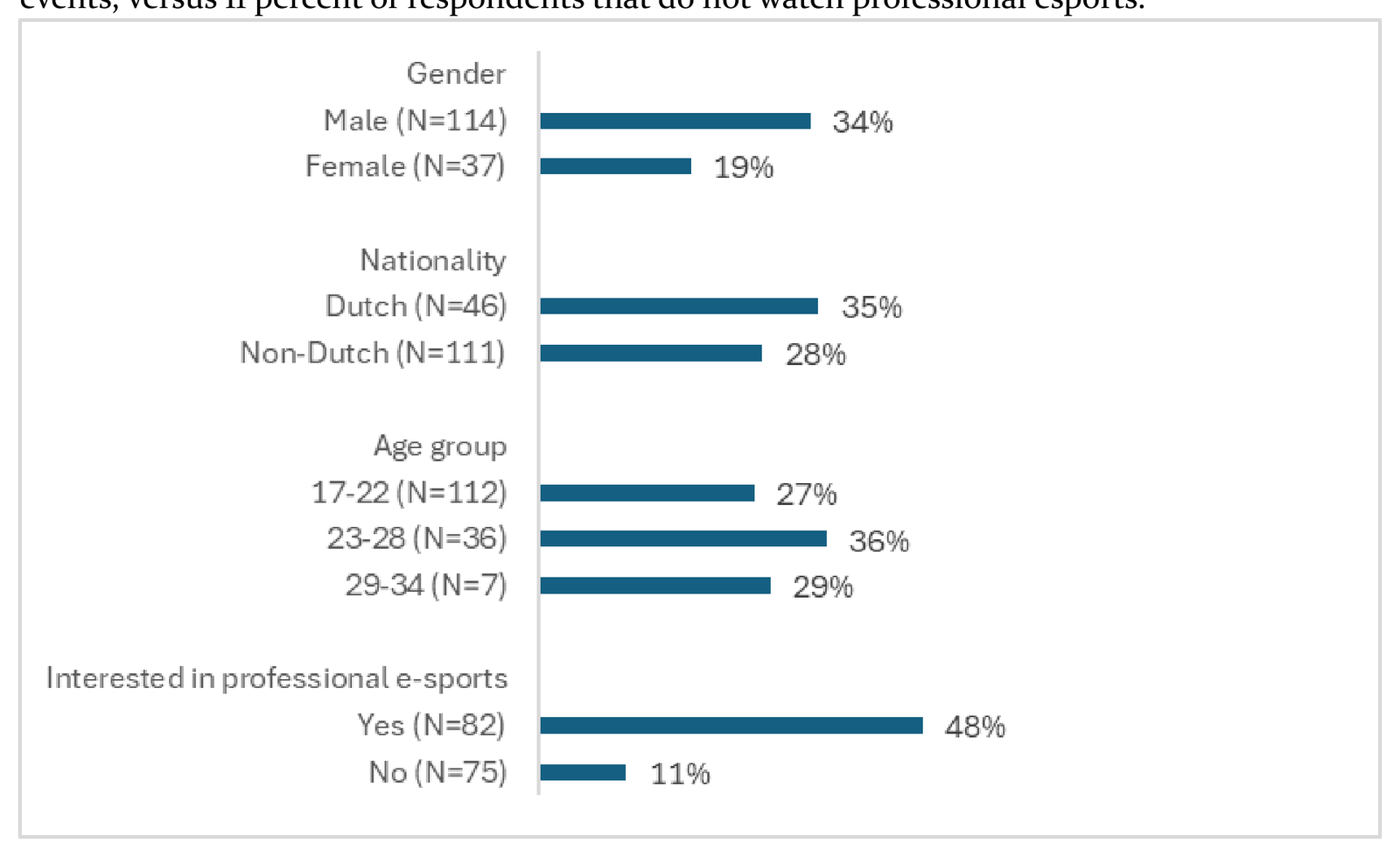
Social perspectives on the esports community
The respondents of the questionnaire were shown statements regarding their perspectives on the esports community. The results of the survey regarding this topic are presented in Table 2. The respondents are generally in agreement with the statements on whether esports events can contribute to building a sense of community among participants (4,04 out of 5), and whether these events can broaden your social network (3,87 out of 5). More often than not, attendees of the event state that esports events are more socially inclusive than traditional sport events (3,43 out of 5)
Notably the general opinion on these statements minimally differs between first-time and regular esport event visitors, or between males and females (not in figure).
| Minimum | Maximum | Mean | Std. Deviation | |
|---|---|---|---|---|
| Esports events can contribute to building a sense of community among participants. | 1 | 5 | 4,04 | 1,11 |
| The social aspect of esports events is important for your overall experience. | 1 | 5 | 3,83 | 1,09 |
| During the esports event you can broaden your network. | 1 | 5 | 3,87 | 1,13 |
| Esports events are more socially inclusive than traditional sport events. | 1 | 5 | 3,43 | 1,18 |
Table 2: Social perspectives on esports events by visitors of these events (N=104)
Respondents were asked to compare esports events to traditional sports events when it comes to the social importance of these events. Figure 2 shows that 75 percent of respondents state they think esports events and traditional sports events are equally socially important. 12 percent of respondents feel that esports events are less socially important than traditional sports events, and 13 percent think that esports events are more socially important than traditional sports events.
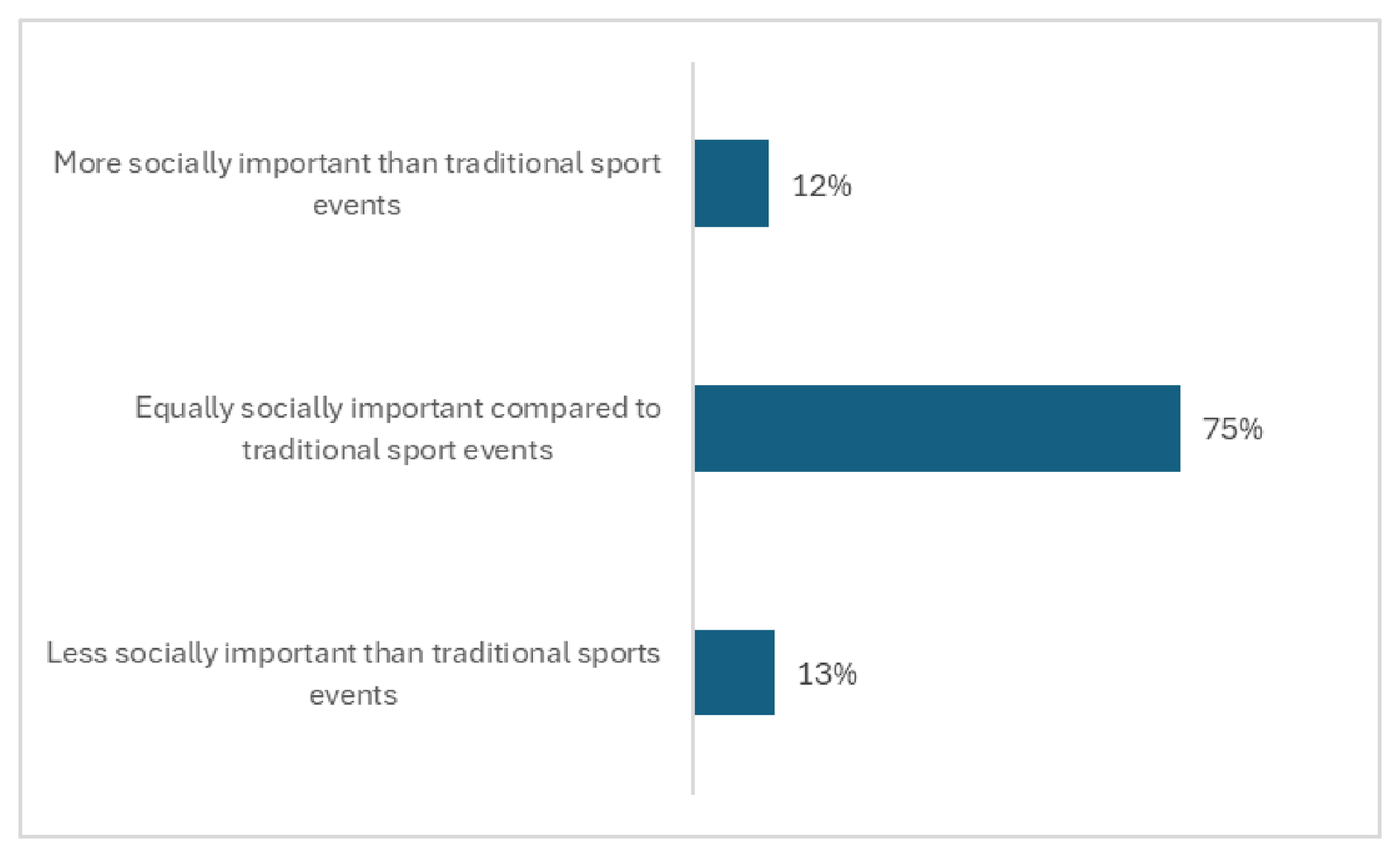 Figure 2: Social importance of esports events compared to traditional sports events (N=102). Note – Only attendees from the 2025 and 2026 events were asked this question.
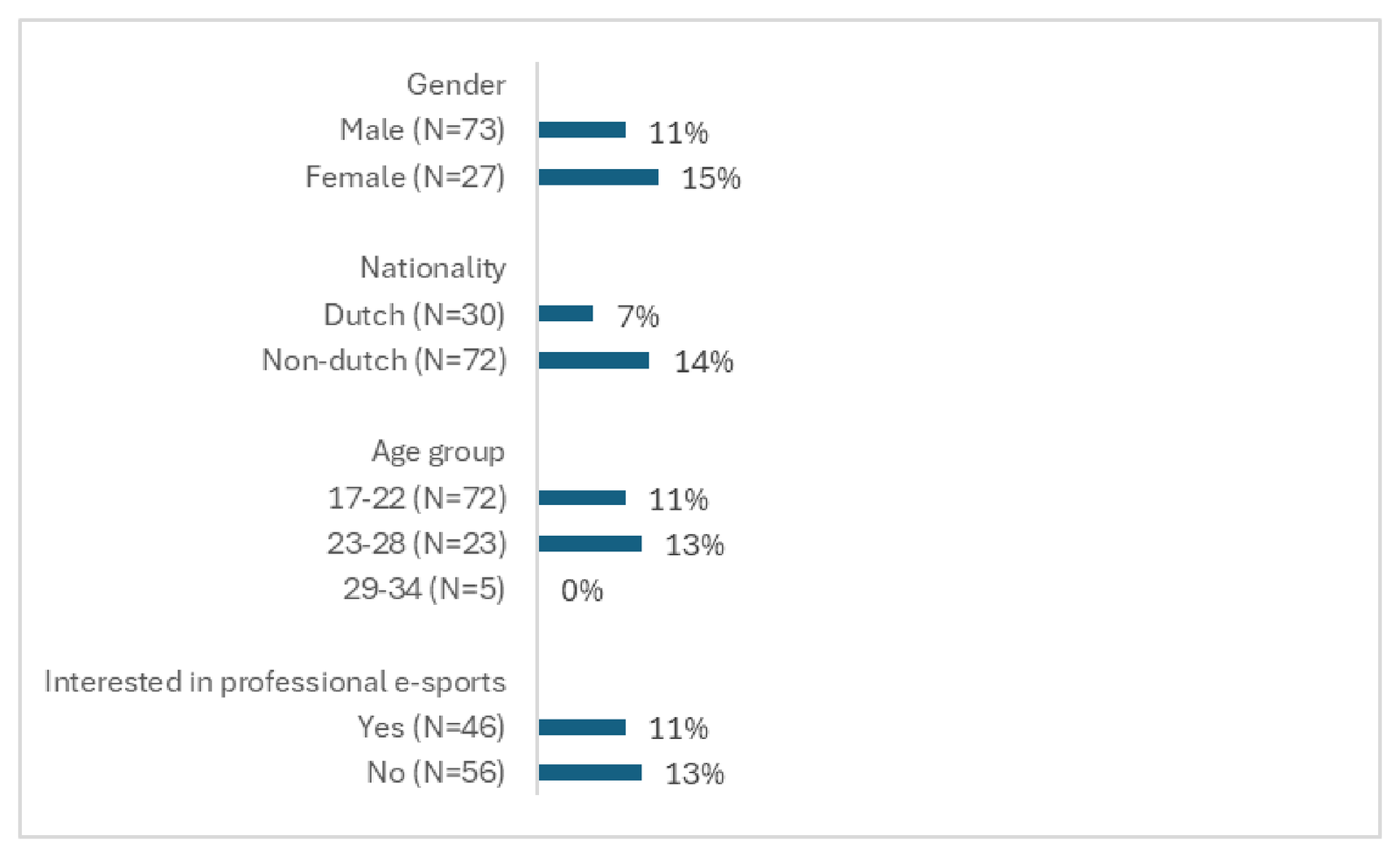
Figure 3: Attendees of esports events stating esports events are more socially inclusive compared to
traditional sports events (N=102). Note – Only attendees from the 2025 and 2026 events were asked this
question.
Integration The second set of data that will be analyzed are the 8 interviews that were conducted after the completion of the event. The interviews were divided into four subthemes before the execution after discussions on the topic of social impact taking into consideration some aspects of social models such as the MESSI model.
The theme of integration focused on how the event acted as a social agent, especially for participants who might find it difficult to connect with others. Due to the diverse background of the participants, the event can be used to integrate themselves into social groups. The event created a space where participants with shared interests, such as esports, could come together naturally. Interviewee’s 2 comments that "if a person has it hard to get into some groups and hard to socialize and make new friends..." suggests that by offering a common activity, it can break down social barriers. The value of shared interests is reinforced by the remark, "The sport was the language that connected everyone" (Interviewee 5). Comparable to traditional sports, small scale esports events provide a platform for players of all backgrounds to interact and form bonds with the set-up of the event contributing to the overall feeling of community by creating a friendly and inviting atmosphere. The comment "When I entered, I thought of a community since everyone was so nice to each other" (Interviewee 3) shows how first impressions can foster a strong sense of belonging. Furthermore, Interviewee 6) stated that a "stress-free environment" gave them the comfort they needed to make new relationships. Overall, the event seemed successful in creating an inclusive atmosphere where participants felt integrated quickly, regardless of their overall confidence in social settings.
Socialization The vast number of remarks about socialization emphasizes how important interaction was to the participants' experiences. There was a wide range of social interactions available during the event, which ranged from light-hearted small talk to deeper connections. According to the comment, for some, the event served as a low-pressure way to meet new people, as quoted by interviewee 3 "I met students from our first year, and we got to know each other" it's critical to draw attention to the diversity of social interactions. Interviewee 2 indicated, for example, that they "haven't had some deeper conversations," suggesting that the event may have been more of a chance for cursory, superficial contacts for some. This is consistent with the remark made by Interviewee 2 ("We just had some small talks, but I'm not that much of a social person"), which highlights the potential influence of unique personality qualities on the degree of socialization. It's meaningful to note that those who didn't have meaningful talks yet enjoyed getting to know new people. For instance, interviewee 6 expressed a strong preference for "the socializing aspect," suggesting that the social side of being in a lively and competitive setting held a certain appeal. Others found that the rivalry encouraged friendship: "I started talking to some people even though I was competing with them" (Interviewee 6). This theme also demonstrates interesting ways in which socialization can be aided or hindered by competition. If winning had taken precedence over engagement, some participants may have found it more difficult to connect, whilst others may have thrived on the competitive edge and formed ties around it.
Inclusivity Participation was not hindered by differences in race, religion, or other personal characteristics because of the space that the event has established. The statement made by interviewee 4, "The event was inclusive to everybody," captures this welcoming atmosphere. A noteworthy observation made by Interviewee 3 highlighted the diversity of the participants: "There were other people from different ethnicities, different religions." An intriguing component of inclusivity was that attendees were under no obligation to discuss private aspects of their identities—that is, unless they so desired. "I never got to talk about their religion or ethnicity" (Interviewee 3) highlights the wide appeal of the event since, despite its diversity, the emphasis was on shared activity rather than individual distinctions. This feature might have established a welcoming and impartial environment for conversation. The inclusiveness persisted even in competitive situations. Respondent number six expressed that he felt accepted despite the competitive environment, saying, "I felt that I could be myself during the event," which demonstrates how the setting struck a balance between inclusion and competition.
Networking Another significant advantage that attendees reported from the event was networking, with many highlighting how it offered a natural setting for forming both social and business connections. "It's a good way to network, to socialize, and to have fun," said interviewee 4, summarizing how well the event integrated these many elements. Beyond the realm of esports, the event provided chances to forge enduring connections. Interviewee 5 emphasizes that esports events can serve as a platform for future encounters, extending the impact of the event beyond its day. "Through esports events, get the connections and then meet up outside of such events. Networking transcended social and scholarly domains as well. Interviewee 7, for example, responded, "Yeah, the network, I will say, was the best because, as I said, I met a lot of students." This emphasizes the wider benefit of these kinds of gatherings as instruments for academic socialization, especially in a university context where cross-program relationships are sometimes scarce.
Event organization and purpose
From the perspective of the organizer (Interviewee 8), "the event's goal was to unite students in a competitive, social setting that promotes inclusivity and connection”. The event’s success in achieving this goal is shown by participants' positive feedback. The organizer highlighted the casual, welcoming atmosphere, noting that "no fights, participants are happy losers," which attests to the spirit of the event one focused on pleasure and community rather than competition. Key organizational elements like the provision of food, drinks, and music helped cultivate a relaxed, enjoyable atmosphere. This facilitated informal interactions and made the event feel more like a community gathering than a strict competition. This, in turn, supported the social and integrative goals of the event. The organizer also mentioned that the prize structure was carefully considered, suggesting that “larger prizes can lead to jealousy, but the event focused on pride and a trophy rather than money.”
Discussion
The data showcases that the event was more than just a gaming session; rather, it was a multifaceted experience that gave attendees chances to socialize and integrate in a welcoming setting. Every element was interconnected: networking benefited from inclusivity, socialization led to integration, and the organization provided an environment where these relationships might grow. The event's success in uniting individuals to meet a range of social demands, from casual encounters to more meaningful relationships, while preserving a pleasant yet competitive environment. We can see a similar process with the Messi model introduced by Riatti and Thiel (2021), more specifically on social equality and inclusion dimensions. This dimension focuses on promoting equality and social integration through participation.
The professional setup and inclusivity of the events were appreciated by the participants, who also liked experimenting with different activities. Even if they weren't particularly social, many enjoyed the social component of it, meeting new people and talking with those who had similar interests. There was a noticeable competitive attitude, but it was counterbalanced with good times and a friendly environment. For some, the use of professional gear and virtual reality in particular stood out, improving the whole experience. Diversity and inclusivity were evident, with participants from many backgrounds feeling accepted and included with English being the common language used. The events created a relaxed atmosphere that made it simple to socialize and communicate, and it worked well as a platform for forming contacts that might lead to long-term relationships. This behavior can be linked to the second dimension of the Messi model Collective identity and pride by Riatti and Thiel (2021). This specific dimension focuses on shared identities and pride amongst participants in esports events.
Additionally, the study demonstrates the important social influence that esports competitions have on esports enthusiasts that can potentially build a community by emphasizing how they can promote inclusivity, social interaction, and inclusive involvement. The data showcases that there is an insignificant difference between statements on the importance of esports for social wellbeing. Both first time participants and the ones who visit regularly esports events share similar opinions for esports events as community facilitators. The findings suggest that both female and male participants believe on the positive social impact of esports. However, we see that female participants are more likely to report these events as more socially inclusive compared to regular sports events. Yet the differences are not significant which signals that esports are slowly being recognized across genders as a social space parallelling traditional sports community. Furthermore, when comparing the Dutch participants and the non-Dutch, we notice some differences. Non-Dutch participants see esports as a more socially inclusive and effective in building communities compare to Dutch participants suggesting that the local esports ecosystem is perceived as an accessible social environment. Dutch participants highlighted the importance of networking through small scale esports events showcasing yet another cultural attitude towards esports engagement. This suggests that small scale esports events can create a space for personal and professional growth.
Regarding the positive effects on society, traditional sports and esports share a lot of similarities as seen in the findings. Both are effective means of fostering the community and enhancing both mental and physical health. Surveys and interviews yielded information that shows esports competitions, similar to traditional sporting events, may contribute and become essential for creating a sense of camaraderie among competitors and viewers. Attendee connections are facilitated by the great volume of pre- and post-event comments, which suggests that these events are a major issue of social interaction. The socializing potential of esports is highlighted by the fact that most participants engaged in conversation with strangers during the event. This is consistent with research by Pu et al. (2021) and OUP Academic (2021), which highlighted how esports contests foster a sense of community by bringing people together via similar interests and experiences.
Small scale esports competitions can be particularly inclusive, providing a venue for people from different backgrounds and cultures to connect. The inclusion of those with different preferences and the varied attendance demography serve as a testament to esports' inclusiveness. This openness promotes a welcoming atmosphere for people of all genders, nationalities, and ethnicities. This is further supported by participant testimonials in the interviews, which highlight the event's capacity to accommodate both seasoned players and newcomers, fostering a welcoming and encouraging environment. These results are in line with an earlier study that emphasizes how inclusive and compassionate esports are (OUP Academic, 2021).
Positive response from attendees who valued the opportunity to meet new people and broaden their social networks indicates the importance of the networking opportunities offered by esports events. This feature of esports competitions encourages the growth of social capital, which is essential for the cohesiveness and development of communities. The gatherings' organized yet laid-back atmosphere encourages meaningful encounters and helps to forge lasting relationships. The findings have wider ramifications, as they imply that esports competitions might both mimic and possibly even surpass the beneficial social effects generally linked to traditional physical sports. Esports events support social cohesiveness and the general well-being of communities by offering a venue for social interaction, community participation, and inclusivity. Younger demographics find esports' combination of technology and interactive entertainment appealing, and this trend is consistent with consumers' needs for more immersive forms of entertainment (Pu et al., 2021; OUP Academic, 2021).
The findings of this study may be applied to enhance both performance and wellbeing within esports teams and gaming events. Coaches, educators, and organizers can use these data to design a socially supportive and inclusive ecosystem that encourages collaboration, mutual respect, and open communication. Incorporating social activities, building informal interactive spaces, and turning team learning sessions into training and competitions can potentially strengthen interpersonal relationships and promote trust among participants. Such environments can contribute to increased motivation for participation, larger engagement, and improved competitive focus by boosting a shared sense of belonging and social responsibility.
In addition, esports events can be used as platforms for personal development and long-term participation. Structured networking opportunities and cross-program activities may further encourage academic and professional development among participants. By embracing social, educational, and wellbeing practises into event design, esports stakeholders and policy makers can support sustainable player development and create environments that foster both competitive success and personal growth which ultimately lead to higher social benefits through esports.
Limitations
Despite the contributions of this study, several limitations should be acknowledged. First, the research focused on three esports events organized within a single university context, which may limit the generalizability of the findings to other institutional, cultural, or competitive settings. Participants were primarily students within a specific age range, and their experiences may differ from those of professional players, non-student populations, or participants in commercial esports environments. Future research should therefore include a broader range of event types, institutions, and demographic groups to enhance external validity.
Second, the qualitative component was based on a relatively small number of interviews, with no follow-up interviews conducted after the second and third events. Although recurring themes emerged and aligned with the survey results, a larger and more diverse interview sample may have provided additional perspectives. Future studies may benefit from conducting longitudinal surveys across multiple events and time points to capture changes in experiences, social dynamics, and engagement patterns over time. Subsequent research may strengthen methodological rigor by adopting or adapting established scales related to social capital, community engagement, and wellbeing, and by conducting formal reliability and validity testing.
Finally, future research should consider using larger and more diverse samples, including greater representation of females and older participants. It would also be valuable to compare esports events with traditional sport events to better understand similarities and differences in their social impact. Additionally, future studies should address potential self-selection and non-response biases in the data and further explore possible downsides associated with esports.
Conclusion
This study shows that esports events have high potential for social impact that is comparable to the
advantages of traditional sports events. The study's findings highlight that esports competitions can
play a role in contemporary culture by encouraging social contact, community involvement, and
inclusivity. The intense levels of engagement and communication that occur prior to, during, and
following the events underscore the pivotal function that esports play in promoting social bonds.
Additionally, by offering inclusive settings for people from different backgrounds and physical
disabilities, these events promote empathy and social cohesiveness. Moreover, esports events enable
networking opportunities that aid in the formation of social capital, which is necessary for the
growth and cohesion of communities. Additionally, a long-term relationship build is facilitated by
the structured yet informal setting of small-scale esports events.
Acknowledgments
We would like to express our gratitude to all the participants who agreed to take part in the study
Funding
The funding for this study was provided internally through the Impact of Sport research group at
The Hague University.
Declaration of Interest
The authors declare that they have no conflicts of interest to report.
References
| Interviewee | Gender | Role | Nationality |
|---|---|---|---|
| 1 | Male | Participant | Hungary |
| 2 | Male | Participant | Brazil |
| 3 | Female | Participant/attendee | Bulgaria |
| 4 | Male | Participant | Slovakia |
| 5 | Female | Attendee | Germany |
| 6 | Male | Participant | Germany |
| 7 | Male | Participant | Slovakia |
| 8 | Male | Organizer | Netherlands |
- Baumann, A. C. K., Pallesen, S., Mentzoni, R. A., Kolberg, E., Waagbø, V., Sørensen, A., & Kristensen, J. H.
- (2024). An exploratory qualitative interview study on grassroots esports in sports clubs. Frontiers in Sports
- and Active Living, 6, Article 1334567. https://doi.org/10.3389/fspor.2024.1334567
- Bryman, A. (2016). Social research methods (5th ed.). Oxford University Press.
- Chen, N. (2015). Social impact of major sports events perceived by host community: A case study of
- Shanghai. https://www.researchgate.net/publication/292148445
- Creswell, J. W., & Creswell, J. D. (2017). Research design: Qualitative, quantitative, and mixed methods
- approaches (5th ed.). SAGE Publications.
- Delello, J. A., McWhorter, R. R., Roberts, P., Dockery, H. S., & De Giuseppe, T. (2023). The risks and rewards
- of collegiate esports. International Journal of eSports Research, 3(1), 1–18.
- https://doi.org/10.4018/IJER.2023010101
- Eime, R. M., Young, J. A., Harvey, J. T., Charity, M. J., & Payne, W. R. (2013). A systematic review of the
- psychological and social benefits of participation in sport for adults: Informing development of a conceptual
- model of health through sport. International Journal of Behavioral Nutrition and Physical Activity, 10,
- Article 135. https://doi.org/10.1186/1479-5868-10-135
- Esports Charts. (2025). Most popular esports games 2025. https://escharts.com/top-games?order=peak
- Hayday, E. J. (2023). Conceptualizing the social inclusion potential of esport. Journal of Experiential
- Education and Games, 1(1), 1–15. https://doi.org/10.1123/jege.2022-0033
- Kwan, J. (2025). The impact of esports on the development of 21st-century skills and academic performance
- for youths. Biomedical Journal of Scientific & Technical Research, 62(1), 54291–54309.
- https://doi.org/10.26717/BJSTR.2025.62.009694
- Kwan, J. (2025). The impact of esports on the development of 21st-century skills and academic performance
- for youths. Biomedical Journal of Scientific & Technical Research, 56(2), 44789–44795.
- https://doi.org/10.26717/BJSTR.2025.56.009123
- Misener, L., & Mason, D. S. (2006). Creating community networks: Can sporting events offer meaningful
- sources of social capital? Managing Leisure, 11(1), 39–56. https://doi.org/10.1080/13606710500445676
- OUP Academic. (2021). The impact of esports and online video gaming on lifestyle behaviors. Oxford
- University Press.
- Precedence Research. (2025). Esports market size to attain around USD 48.09 Bn by 2034.
- https://www.precedenceresearch.com/esports-market
- Riatti, P., & Thiel, A. (2021). The societal impact of electronic sport: A scoping review. German Journal of
- Exercise and Sport Research, 52(3), 433–446. https://doi.org/10.1007/s12662-021-00732-7
- Richards, G., de Brito, M. P., & Wilks, L. (Eds.). (2013). Exploring the social impact of events. Routledge.
- The Sports Ground. (2021). Why are sports important to society: The impact and significance explained.
- https://www.thesportsground.com/why-are-sports-important-to-society/
- UK Sport. (2023). Major sporting events are having positive social impact across the UK.
- https://www.uksport.gov.uk/our-work/major-events/social-impact
- Zhong, Y., Guo, K., Su, J., & Chu, S. K. W. (2022). The impact of esports participation on the development of
- 21st-century skills in youth: A systematic review. Computers & Education, 182, 104463.
- https://doi.org/10.1016/j.compedu.2022.104463